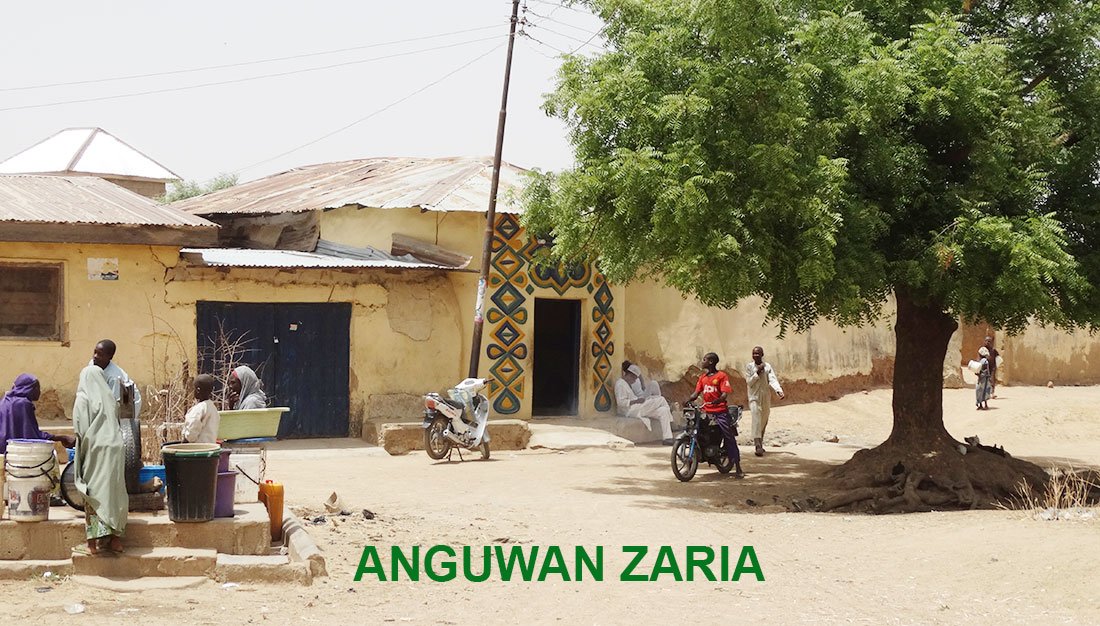
Anguwan Zaria is situated along the Kamacha stream. The genesis of the ward could be traced to the settlement in the area by Zaria, one of the daughters of Bakwa Turunku and a large retinue of her people who were made up of builders, smiths, wood carvers, priests, warriors, labourers, drummers, singers, and many other occupational groups. The site was initially chosen as a temporary base for Zaria and her people from where she could oversee the construction works of the ganuwa, the royal Palace and other structures such as wells and a house for herself at Anguwan Magajiya. It was because of her role in the establishment of this settlement that the ward bears her name. However, on completion of the construction project, Zaria and a large body of her people evacuated to a new permanent abode, which she had already built for herself at Anguwan Magajiya. Her movement significantly, reduced the density of the population of Anguwan Zaria until the late 18th century when the population of the ward got a boost.
What gave a fillip to this was the geographical condition of the area that made the site more attractive due to its fertility and abundant supply of water because of its location along the Kamacha stream. Another factor was the religious significance, which the area around the Rimin Danza and Kofar Matarkwasa came to assume. This was a factor that influenced the immigration of large number of occupational groups into the ward.
Apart from the occupational groups that settled in Anguwan Zaria as mentioned above, other dominant groups include the lineage of Madakin Zazzau Kyankyaro and the Sarakunan Kofa. Madaki kyankyaro was believed to have become too powerful. The realization of the enormity of his powers tempted the Madaki to attempt the physical extermination of the then Habe ruler Isiyaku Jatau with the aim of taking over the mantle of leadership from him. The situation was so critical that it was only with the intervention of Sarkin Fatika that the assassination bid was foiled. Consequently, Madaki Kyankyaro was deposed. However, despite the deposition of Kyankyaro, his lineage continued to enjoy a dominant position in the ward at least up to the outbreak of the Jihad in 1804 A.D.