THE SECURITY OF THE BIRNI
The role of security in the growth and development of any nation need not be over emphasized. That consciousness of the significance of security is recognized even in ancient times as reflected in the settlement patterns of Hausa kingdoms generally where for security consideration people tend to congregate in defensible areas initially as provided by natural factors such as inselbergs, and later when this proved inadequate, security was reinforced by artificial fortifications in the form of Ganuwa. It is against this background that the role of the Zaria wall should be seen. The wall provided the much needed security against external threats from its inception up to the time when it fell under the impact of the British maxim guns in 1902. A number of factors need to be taken into consideration in explaining why Zaria enjoyed a long period of security, a factor that enabled the state to consolidate itself and begin to extend its power to other territories. One of such factors was the imposing nature of the ganuwa, which was constantly modified to cope with improved tactics of warfare and weapons. For instance, the Zaria wall which was initially 24km in diameter was reduced to 15.8 km in circumference. This was following the realization that it was too large for effective defence. This seems to have taken place around the 1700 A.D. The height of the wall was between 16-18 feet and 14 feet thick at the base. This was to counter the destructive effects of tall horses that were then adopted in warfare, while the thickness was to forestall any attempt by daring raiders from breaking through the wall. Security around the gates was fortified by constructing them in a re-entrant angle with battlements and perforated holes to help in waylaying invaders of the Birni and exposed them to the weapons of the defenders. To further strengthen the defences of the walls thorn thickets were planted round them. This was to make it very difficult for both infantry and cavalry forces to have easy access to the wall. This resulted in strengthening the security of the Birni. The extent of the security enjoyed by Zaria was such that for instance between 1750 and 1808 large numbers of people from neighbouring villages such as Gimba, Dumbi, Karaukarau, Dobo, Pantaki, Kaya, Gangara, Kidandan, Yakawada, Dan Mahawayi migrated into the Birni for security reasons. The existence of a standing army in Zaria also has an important contribution to its security. The standing army kept constant vigil on the gates and especially areas considered to be security wise weak. While highlighting on the role of the standing army in the process of urban growth and state formation, Mabogunje stated that: ………it was an important concomitant of the rise of an urban centre and that the technology and tactics of a society accounted for its ability to dominate neighbouring cities to the extent that it could provide its own “Pax” and create a nation or empire.
EXPLORATION OF IRON
The Exploitation of iron was also an important factor in the warfare capabilities of the Birni and by implication its security. The exploitation of iron revolutionised warfare by introducing new weapons into the system of war. These included Takobi (sword), Mashi (spear), Kibiya (arrow), and Wuka ( Knife ). The use of horses in warfare particularly between the 15th and 16th centuries brought many military successes to Zaria. For instance, it helped Amina during her 30 years military exploits against areas such as Nupe, Kwararrafa, Bauchi, Ningi, Gbagyi, Gwandara, Doma, Yeskwa, Kwato, Attagara, Kano and Katsina. It should be noted that external military successes often meant internal security at home. The reorganization of the military in Zaria was also effected in the 16th century. This initiative brought much military success to Amina and greater internal security to the Birni. The reorganization involved the placement of Uban dawaki (head of cavalry) at the head of the army. The Uban dawaki was seconded by the Magayaki who was responsible through his trusted and able bodied men for scouting and intelligence duty in enemy territory to spy over the enemy and among other things study his strategies, strength, type of weapons as well as defence system. The formation and development of Anguwanni (wards) within the Birni was a product of its internal security, which it enjoyed over the years. The spatial growth of the Birni following the expansion of earlier centres of human habitations.
GANUWAR ZARIA
City wall commonly called Ganuwa in Hausa is a unique feature that commonly characterized the Birane in Hausa land. The ganuwa formed an integral part of the Birni and also constituted one of its major physical elements. The Birni wall was a reflection of the collective security consciousness of the Zazzagawa at an early period of their existence to develop out of the local environment, a technological device that could provide them with the much needed protection and security. These efforts manifested in simple artificial fortifications such as the walls. In other words, these walls represented the application of society’s imagination and ingenuity to the specific military and even political and economic needs.
Despite the loss of its defensive significance, following the British conquest, of the Birni in 1902, the Zaria wall still performs some psychological functions. For instance, the ganuwa still demarcates the city from the rest of the area and people surrounding it. It thus became a distinguishing factor between those who resides within the walls of the Birni, otherwise known as yan Birni and those living outside the walled city variously known as yan waje or yan karkara. In addition to this, the ganuwa gave its occupants that conscious feeling of belonging and a sense of unity, identity and cultural superiority over those residing outside it. But it also poses the danger of segregation and isolation in a plural and globalise society.
The wall of Birnin Zaria as it is presently is an imposing one extending from Kufena and went round Tukur-Tukur Village, reaching Madarkachi hill, covering an area of 24 kilometres in diameter. However, it is important to note that the ganuwa in its present dimension never started as it is now. It was rather a culmination of a long process of evolution involving the transformation and final fusion and incorporation of earlier walls that were hitherto in existence.
The re-construction of this imposing wall seemed to have been spurred by the military campaign spearheaded by Sarkin Kano Kanajeji (c.1390- 1410) as mentioned earlier against Zaria, a situation that led to the desertion of the town of Zaria to Turunku. With the consolidation of the dynasty at Turunku and the subsequent defeat and expulsion of these external threats, necessary conditions appeared to have been provided for the emergence of the settlement into an important economic, commercial and political centre. However, the potentials of the settlement could not be adequately exploited without provision of internal security that could ensure peace and safeguard against further external threats. It was this and other objective realities that necessitated the reconstruction of the city wall and the transfer of the capital to the new city named after Zaria, one of the daughters of Bakwa Turunku who supposedly spearheaded the reconstruction of the city wall.
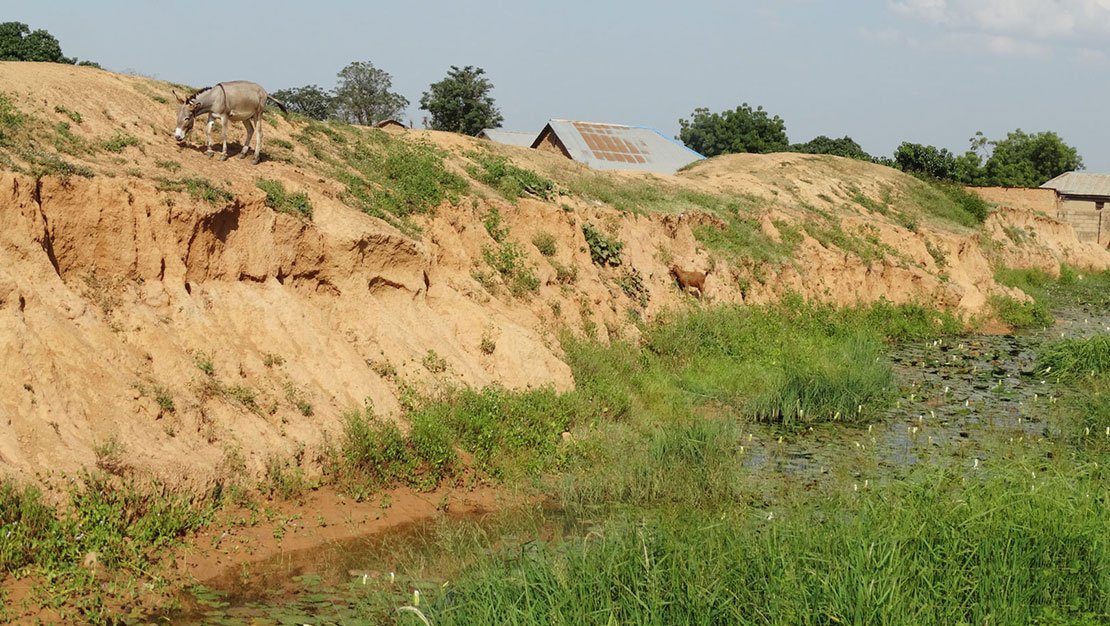
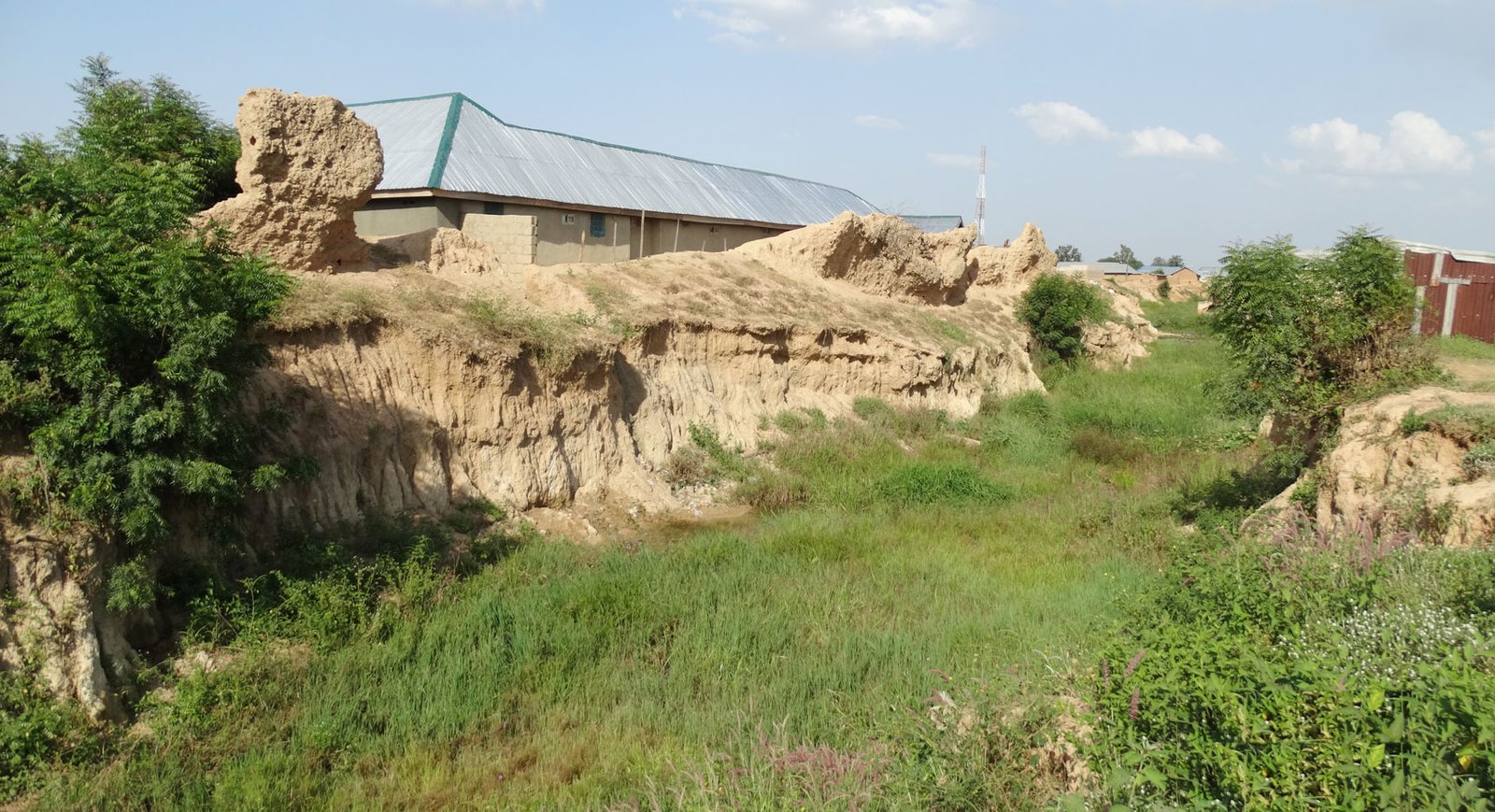
The construction of the Birni wall seems to have led to a shift in the political and religious importance of Kufena. This was following the fall of the Kufena wall into disuse. Local materials were highly utilized in the building of the wall that fortified the Birni. This included mud, laterites and granites. The mud used in the building of the wall was obtained from the immediate environment. What tends to suggest this is the existence of ditches surrounding the wall apparently indicating the source of the mud used in the construction of the wall.
The building project of the city wall was a collective responsibility involving almost every member of the Birni with a clear division of labour. For instance the various occupational groups provided their specialized services for the project. Blacksmiths, wood carvers and pot makers for example were needed in the provision of building materials such as calabashes, earthen pots, and other containers for carrying food, water, earth and grasses as well as building tools such as fartanya, (hoe), galma, (big hoe), gatari (axe), masassabi (adze) and pales. The citizens of the Birni on the other hand provided the substantial part of the labour force used in the construction project. This was complemented by slave labour. The skilled labour of the society were mobilized and organised around occupational guilds with a hierarchy of officials. In the case of building for instance, it was the Sarkin magina appointed by Sarkin Zazzau who selected and appointed builders in subordinate ranks such as Madakin gini, Galadiman gini, Turakin gini and Shamakin gini. It was these officials in collaboration with ward heads e.t.c. that mobilized the needed labour force for the construction and annual maintenance of the walls. They were also charged with surveying, designing the actual construction and alignment of the wall with due regards to the topography of the area. The same official hierarchy existed for blacksmiths whose skilled labour were employed in manufacturing building tools such as galma, sangwami, and iron locks and latches used to close the city gates. The services of the wood carvers were also employed who carved the door and other materials used in the construction of the door. Drummers were also used in mobilizing labour force and for entertaining the workers at the building site in order to boost their morale. The services of priests and great scholars were also employed to bury charms at particular sites and recite incantations invoking spirits, prophets and particular angels to shield the city against invasion and to bless it with abundant wealth. It should be noted that since public works such as the construction of city wall was usually done under a kind of a state of emergency, people were recruited willy-nilly to participate in the work.
In spite of series of renovations, re-enforcements, and perhaps at certain period long neglects, which characterized the wall since its construction in the 15th century, it was still at least by the arrival of the Europeans an impressive structure. The 19th century European explorers, for instance, Dr. Baikie who passed through Zaria in 1867 during the reign of Sarki Abdullahi gave a vivid description of the wall thus:
Zaria wall stretching for almost ten miles are pierced by eight gates; A ninth gate beyond the Kofar Kuyambana has been filled in for it was through this one that the Habe under their king Makau are said to have been driven south ward to Abuja by Fulani in 1804.
Paul Staudinger who visited Zaria by 1880 also has this to say about the wall:
The town though it covers an immense area is surrounded by a clay wall which at this time was already breached in places. Such walls need frequent repair-work to counteract the erosive effect of the tropical sunshine and the torrential rains……………. A number of gates (Kofa) gave entrance through the town walls and these could be closed with wooden doors and latches. In each gatehouse sat a few of the King’s officials and levied a market toll of few cowries for the ware brought in by farmers of the district. However, we never had to pay such a duty how much they asked and if they also levied a toll from people leaving the town I did not discover.
As correctly observed by Baikie, nine gates were constructed with each of the gates built by twisting the entrance inside. This was to direct the enemy into a narrow front from
where he will find it difficult to fight. Fixing strong wooden doors and latches to them
further tightened defences at the gates. Granites and laterites were used in the construction of the gates in which layers of stones were alternated with layers of clay in order to create a well-built wall.
The names of the gates were Kofar Kona, Kofar Gayan, Kofar Kuyambana, Kofar
Kibo, Kofar Doka, Kofar Bai, Kofar Galadima, Kofar Jatau.