
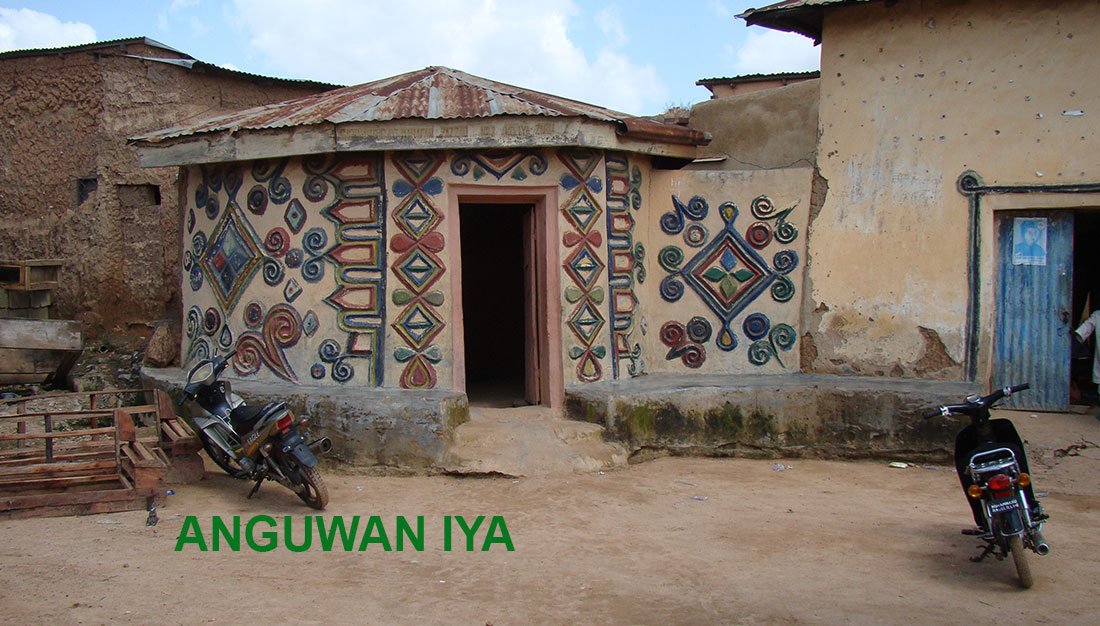
Located to the south of Anguwan Juma is Anguwan Iya. We do not know precisely when human settlement began in this site. But it appeared to be of long antiquity. This is because local tradition has indicated that the whole of the area occupied by the ward and extending up to Kwaba constituted the royal farm since the Habe period. Therefore, if this tradition is anything to go by it is rational to suggest that the site presently occupied by Anguwan Iya constituted part of the large open spaces within the Birni, which were reserved to provide food for the Birni particularly during military siege. According to local traditions Anguwan Iya derived its name from the title of Iya, which was given to Muhammadu Hankurau. Local tradition claims that he was a close associate of Malam Musa, (1808-1821) the first Emir of Zazzau after the Jihad and that after the Jihad Malam Musa intended to give a traditional title to Muhammadu Hankurau but he declined to accept any title except the Iya title. Malam Musa was said to have drawn his attention to the fact that the title was for women and therefore not befitting for him being a male. In spite of all these it was claimed that Muhammadu Hankurau became resolute and retorted by saying “na Hankura da wannan”, meaning “I am contented with this”. Since then he was nick named Muhammadu Hankurau.
Following the confirmation of this title to Muhammadu Hankurau, the Emir apportioned all the lands presently occupied by the Iya ward under his jurisdiction. Located within the ward was a large compound that housed the Sarkin noman Zazzau and a large number of slaves who worked on the royal farm. The royal farm was an area of pre-Islamic practices particularly related to agricultural activities. These included prostitution, gambling, dancing, music, drinking, and other forms of celebrations. Hence it was reported that the compound became a major target of attacks by the Jihadists. With the exit of Sarkin noma from the compound following the Jihad, Muhammadu Hankurau took over the use of the house. It was therefore as a result of the settlement of Iya in this house that the ward came to bear that name.